Troubleshooting
Dishwasher Not Draining Because of the Garbage Disposal
Affiliate disclosure: some links on this page go to Amazon, and we may earn a commission if you buy through them. That never changes the repair advice below or the order we recommend the steps in. Details.
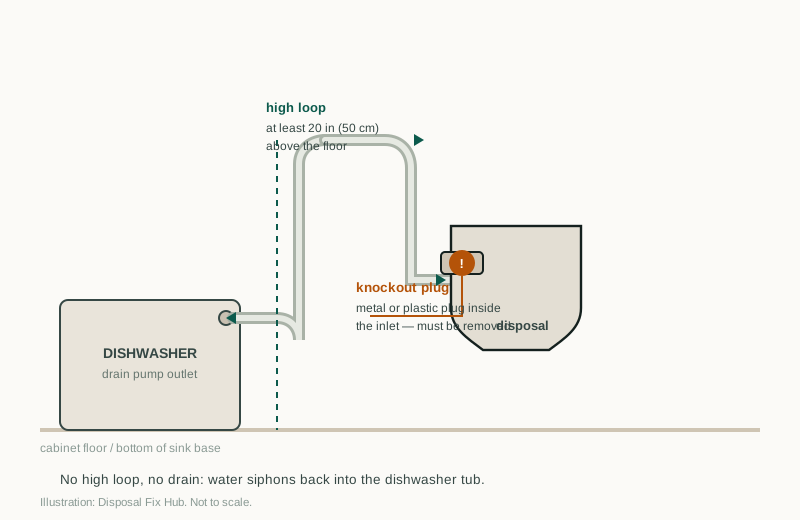
Standing water in the dishwasher after every cycle sends most people to the appliance. Check the disposal first — it is the end of the drain path, and it is the part most likely to have been changed recently.
How the dishwasher uses the disposal
A dishwasher does not drain by gravity. It runs a small pump at the end of the cycle and pushes water out through a hose. On most US installs that hose runs from the dishwasher, through the cabinet, and onto a nipple on the side of the disposal — the dishwasher inlet. The disposal then passes the water into the same drain the sink uses.
That single connection explains a whole category of failures. Anything that blocks the inlet, the hose, or the disposal's internal chamber stops the dishwasher from emptying. It also explains why the sink can drain perfectly while the dishwasher does not: the dishwasher path joins the disposal lower down.
Power off, water contained
Switch the disposal off at the wall and unplug it or kill the breaker before you touch the inlet or the hose. Disconnect the dishwasher at its breaker too if you are working on that end. Keep a shallow pan and towels under the connection — the hose holds water and the disposal inlet will drip. Never reach into the grind chamber.
Check 1: the knockout plug
New disposals ship with a plastic plug molded into the dishwasher inlet. It has to be punched out before the hose is connected. Installers sometimes forget, and the result is a dishwasher that fills, washes, and then leaves water standing because the outlet is capped from the factory.
This is the classic post-install failure. If the dishwasher stopped draining right after a disposal replacement, the plug is the first thing to check — before you take anything else apart. Look at the inlet nipple on the side of the housing. On many units you can see whether the passage is open by shining a light into the hose end once it is disconnected.
Our installation walkthrough covers removing the plug and clamping the hose correctly. If a previous installer left it in, the fix takes a few minutes: disconnect the hose, knock the plug through into the chamber with a blunt tool, and fish out the piece with pliers before reconnecting.
Check 2: a clogged inlet or hose
Once the plug is out, the same grease and food that clogs a sink drain can clog this path. Dishwasher water carries fats, and the inlet nipple is a narrow restriction. Grease cools on the inside of the nipple, food collects behind it, and the opening closes down over months. The foods that cause this are the same ones on our do-not-grind list.
Pull the hose off the inlet and look inside both ends. A soft gray plug of grease is common. Clean the nipple with a small brush or a pipe cleaner, and flush the hose in a utility sink if you can remove it. If the hose is brittle, kinked, or has a crushed section behind the cabinet, replace it — a kink acts like a clamp no matter how clean the inside is.
While you are there, check that the hose clamp is tight and that the hose is not looped below the inlet, which traps water and invites the next clog.
Check 3: the high loop or air gap
The drain hose has to rise above the disposal inlet — commonly about 20 in above the cabinet floor — before it drops back down. That loop of air is what stops dirty dishwasher water from siphoning back into the tub after the pump stops.
Without it, the dishwasher drains, then the last of the water runs backward through the hose into the bottom of the tub. People describe it as "the dishwasher won't drain," but the water is actually returning after a successful drain. The tell is a small, fairly clean puddle rather than the gritty water of a blocked pump.
Fix it by clipping the hose high on the cabinet side or the underside of the counter. Some local codes require an air gap on the countertop instead; if you have one, check that it is not clogged with debris, because an air gap that blocks will back water into the tub the same way.
Check 4: when it is the dishwasher itself
If the inlet is open, the hose is clear, and the loop is correct, stop blaming the disposal. The remaining suspects are all inside the dishwasher: a clogged filter, a blocked pump intake, a failed drain pump, or a float switch that thinks the tub is full.
Pull the bottom rack and inspect the filter. A filter matted with food starves the pump and slows draining. Clean it in hot soapy water. Then check the float — the small plastic dome in the tub floor — for a stuck arm or debris holding it up. If the pump runs but nothing moves, or there is no pump sound at all, that is an appliance repair rather than a plumbing one.
Dishwasher symptom, likely cause
| What you notice | Likely cause |
|---|---|
| Stopped draining right after a disposal install | Knockout plug still in the inlet |
| Drains slowly over weeks, sink is fine | Grease and food in the inlet or hose |
| Drains, then water returns | Missing high loop or blocked air gap |
| Dirty water backs into the sink | Clog in the shared trap or branch drain |
| No pump sound at the end of the cycle | Drain pump or control fault |
| Water left with a clean filter and open inlet | Float switch stuck or pump intake blocked |
Clearing the inlet, step by step
-
Kill the power
Disposal off at the wall and unplugged, dishwasher off at its breaker. Put a pan under the inlet.
-
Loosen the clamp and pull the hose
Back the worm-gear clamp off with a nut driver or screwdriver, then twist the hose off the nipple. Expect a small spill.
-
Look through both ends
Shine a light into the hose and the inlet. Grease, food, or a plastic plug will be obvious. A plugged nipple can be cleared with a bottle brush from the outside.
-
Flush and reconnect
Flush the hose, slide it fully onto the nipple, and tighten the clamp. Restore power and run a short cycle with the sink empty so you can watch for leaks at the connection.
If the sink itself is also slow, deal with that separately — the guide to a slow sink and backing up water walks through the trap and branch line. And if the water smells, the source is usually the inlet and the chamber, not the dishwasher; see disposal smells.
When to replace the disposal
Replace the unit if the inlet nipple is cracked, if the connection will not seal no matter how tight the clamp, or if the housing around the inlet is corroded. A cracked inlet leaks every time the dishwasher runs and cannot be repaired reliably.
Age matters too. A disposal past eight to twelve years with a leaking inlet, a failing motor, or repeated reset trips is not worth patching. Our repair or replace comparison covers the cost side, the brand pages show what each mount type fits, and the troubleshooting index helps confirm nothing simpler is wrong. When you do swap it, confirm the new unit has a dishwasher inlet and a knockout plug you can remove.
FAQ
Why did my dishwasher stop draining after a new disposal was installed?
The knockout plug inside the dishwasher inlet was probably never removed. It caps the outlet from the factory, and the dishwasher has nowhere to pump its water until it is punched out.
Can I run the dishwasher if the disposal is broken?
Not safely. The dishwasher drains through the disposal, so a jammed or removed unit leaves the hose with nowhere to go. Fix or replace the disposal first, then run a cycle and watch the connection for leaks.
How high should the dishwasher drain hose loop?
Commonly about 20 in above the cabinet floor, and always higher than the disposal inlet. The exact requirement depends on local code, and some jurisdictions require an air gap at the counter instead.
Why does the dishwasher drain and then the water come back?
That is siphon action from a missing high loop or a blocked air gap, not a failed drain. The pump empties the tub, then water runs backward down the hose once the pump stops.
Parts and tools mentioned
Affiliate links · price ranges are approximate street prices
Dishwasher drain hose kit
A kinked, brittle, or undersized hose causes most slow dishwasher drains. Kits include the clamp and fittings.
Waste King Legend L-2600 (3/4 HP)
If the disposal inlet is cracked or the unit has no dishwasher connection, a replacement unit with a standard inlet solves it.
If you buy through a link on this page, Disposal Fix Hub may earn a small commission at no extra cost to you. We link to parts and units we would use ourselves, and the repair steps above work whether or not you buy anything. Read the full disclosure.
Sources & review notes
Review focus: the inlet knockout, hose routing, and sink-drain condition are checked before blaming the dishwasher pump.